Published on 30 September 2026
The Azores in August: our group itinerary across São Miguel, Faial, Pico and Terceira
Eleven days of craters, lava-stone vineyards and natural pools in the middle of the Atlantic. Here is this summer's group trip, day by day, which we are running again in August 2027.
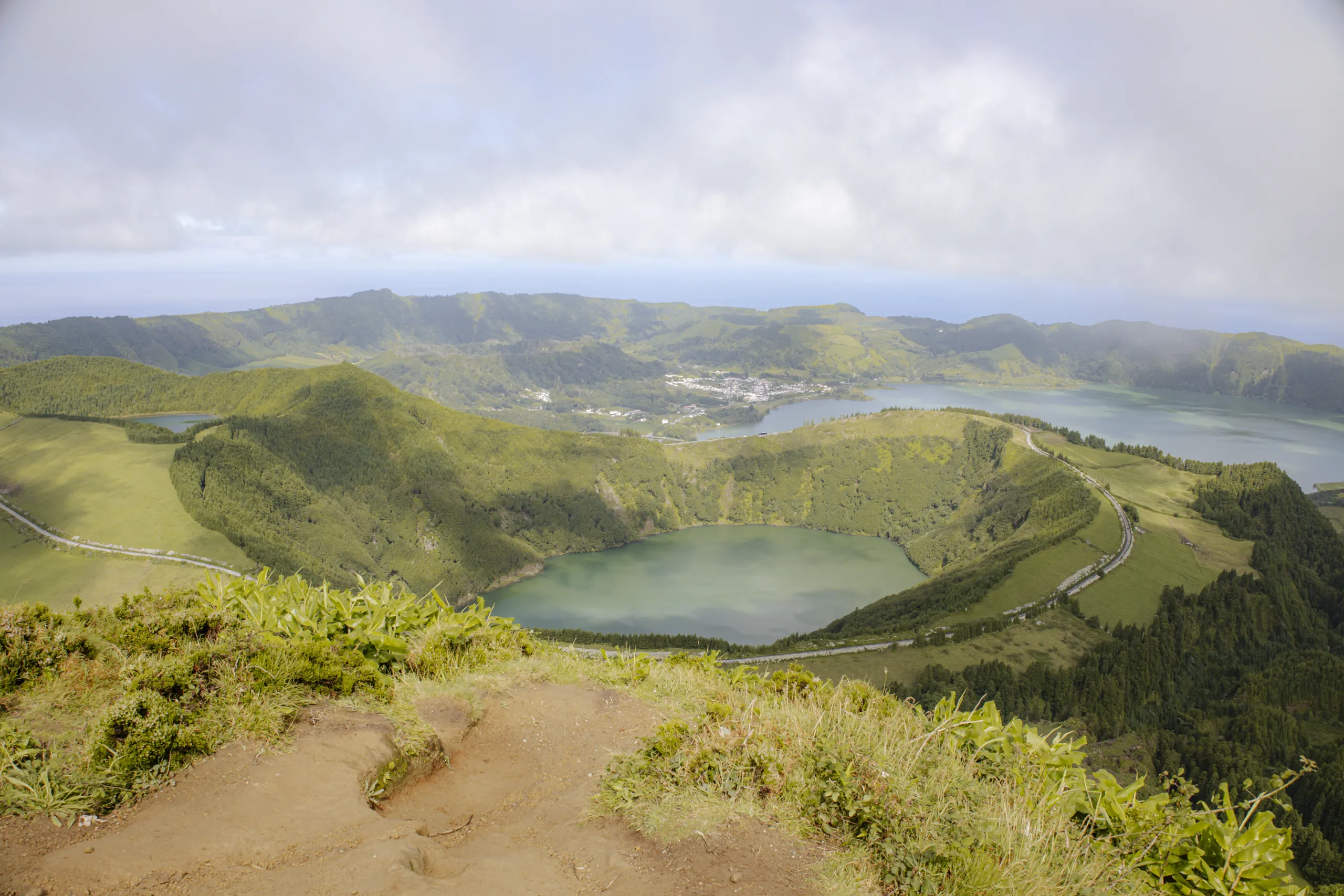
Travelling to the Azores in August is much more than a summer holiday: it is a genuine exploration of the beating heart of the Atlantic. This summer Alessio and I led our group across an archipelago where the power of the earth and untouched nature still set the pace of every day, and it left a mark on us.
It was so intense and so beautiful that we have already decided to run our Azores group trip again in August 2027, so that whoever wants to join us can feel the same emotions. Here is our itinerary, day by day, to give you a taste of what awaits.
Day 1 – São Miguel: Gorreana tea and sunset at Santa Iria
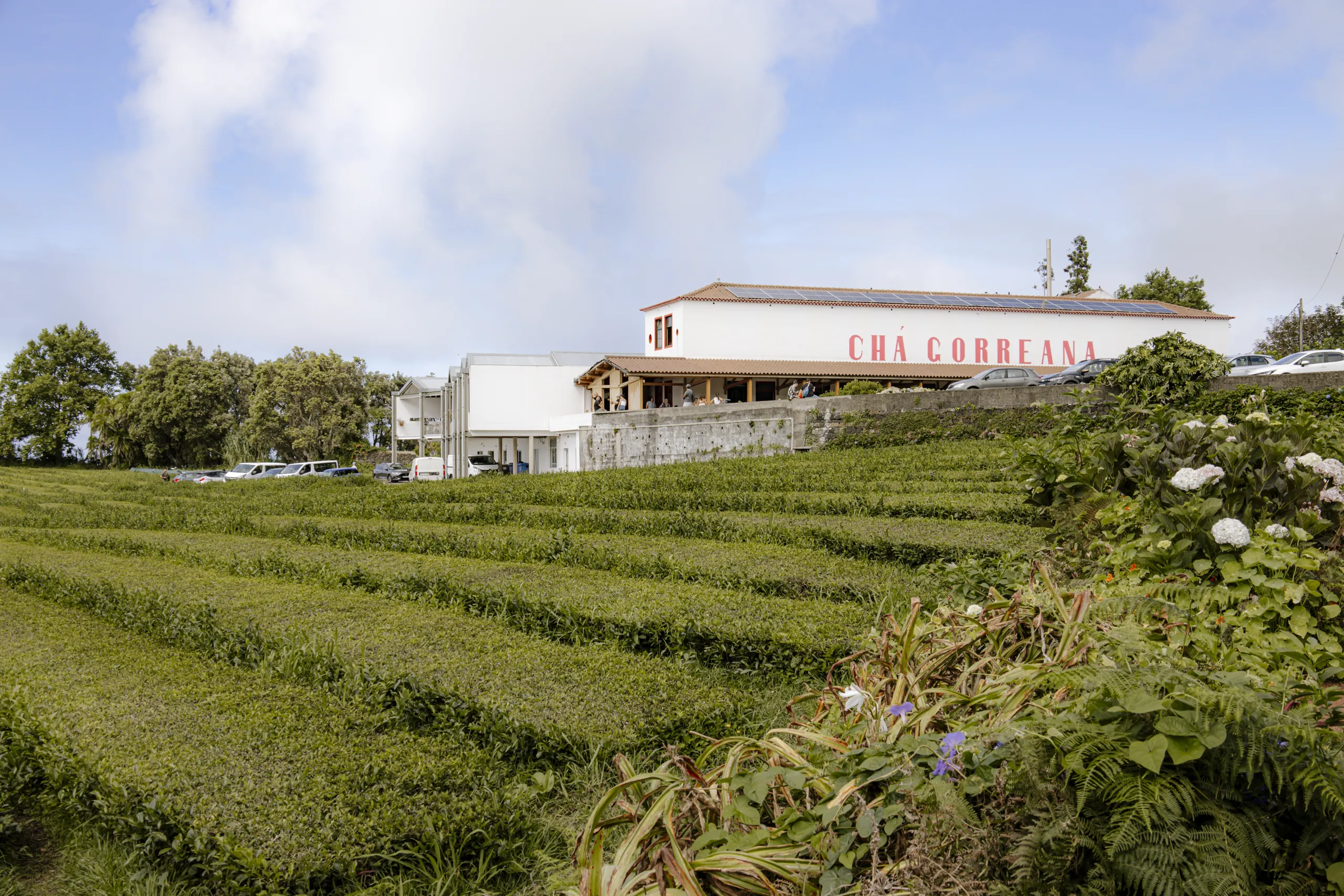
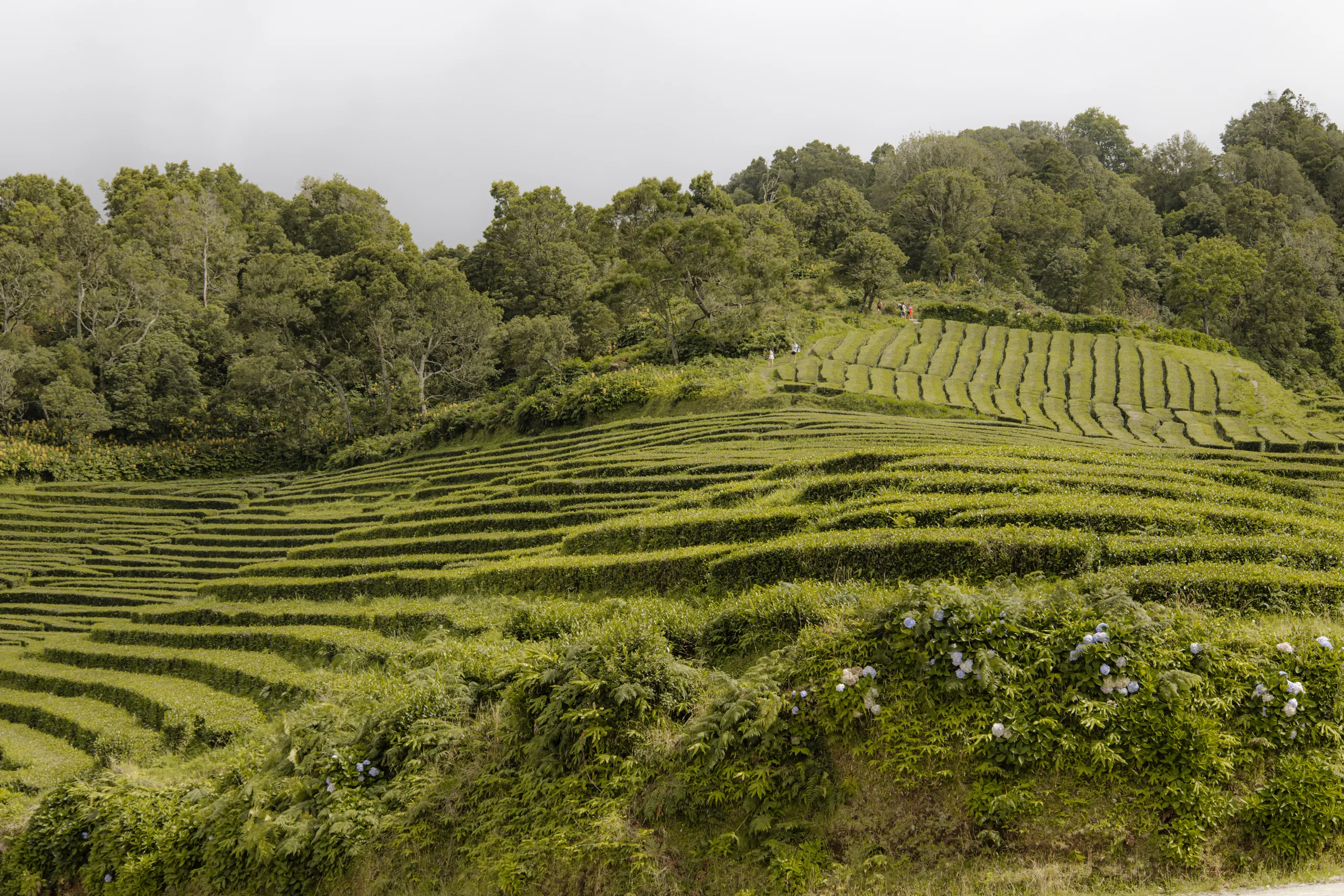
Our trip began on São Miguel, the green island. As soon as we landed in Ponta Delgada we headed for the north coast. Walking through the Gorreana tea plantations, the only ones in Europe, with emerald fields that seem to dive into the ocean, was the perfect ice-breaker for the group. We ended the day watching the sunset from the Santa Iria viewpoint, followed by a lovely dinner together in the old town.
Day 2 – Sete Cidades, Ponta da Ferraria and Mosteiros
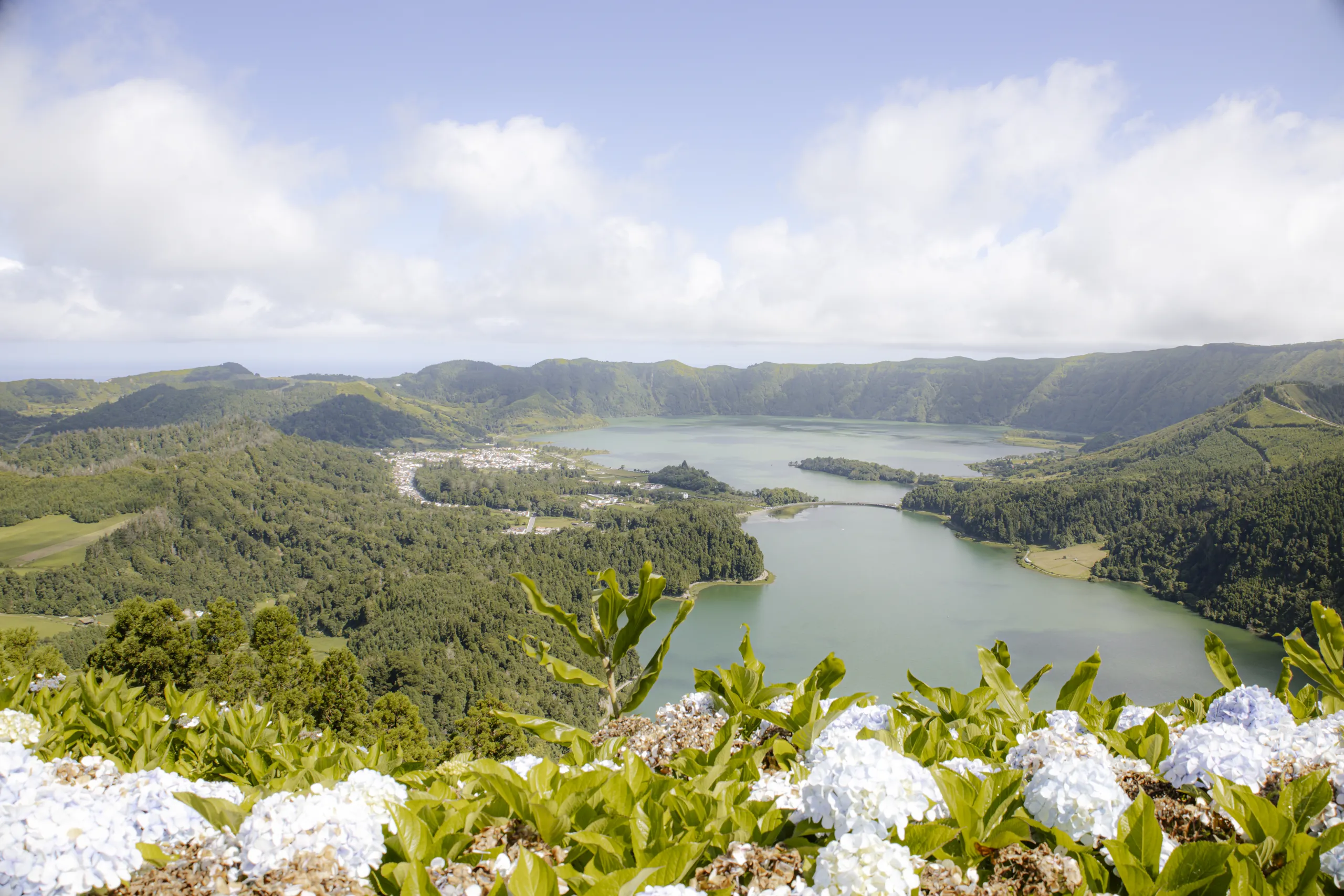
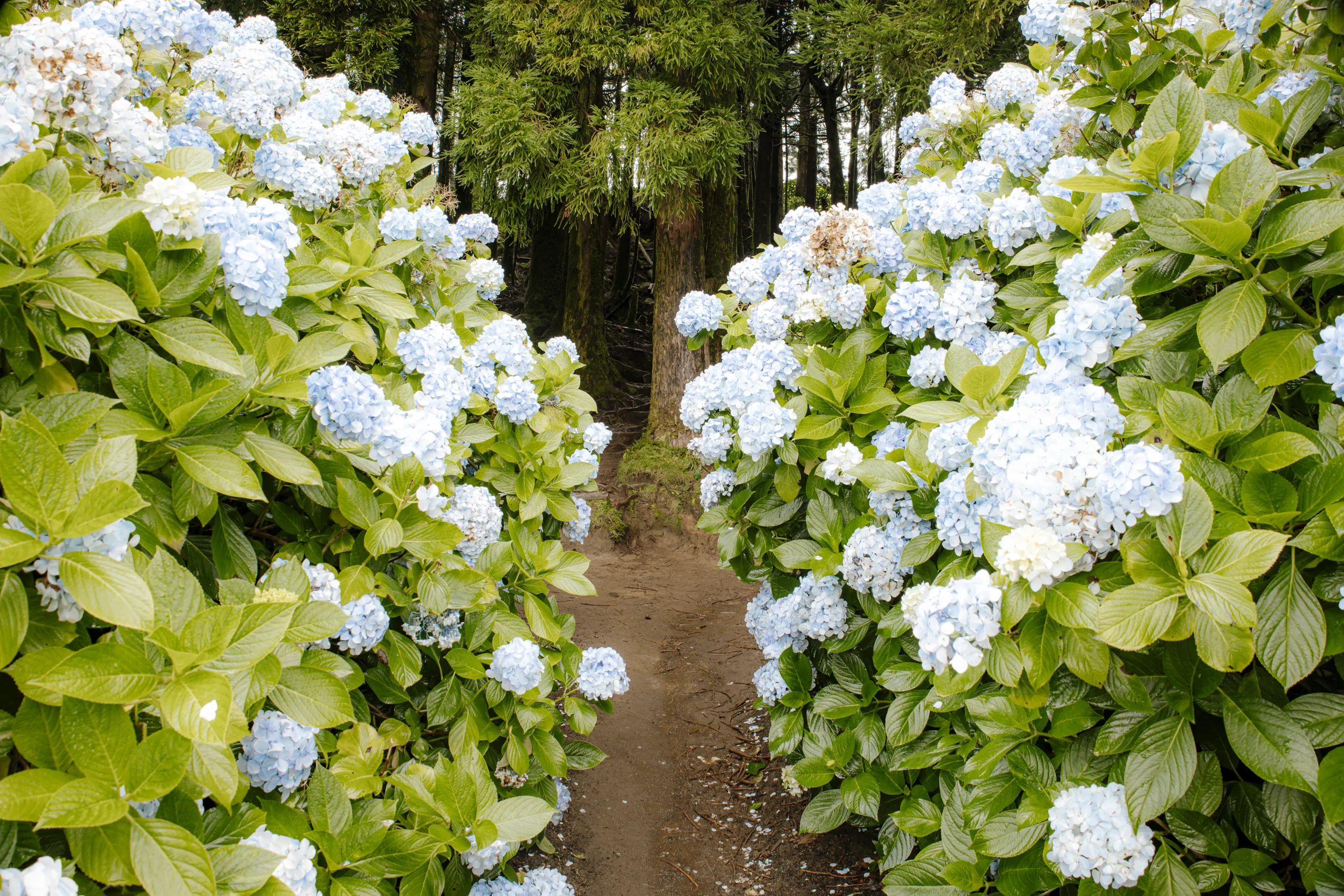
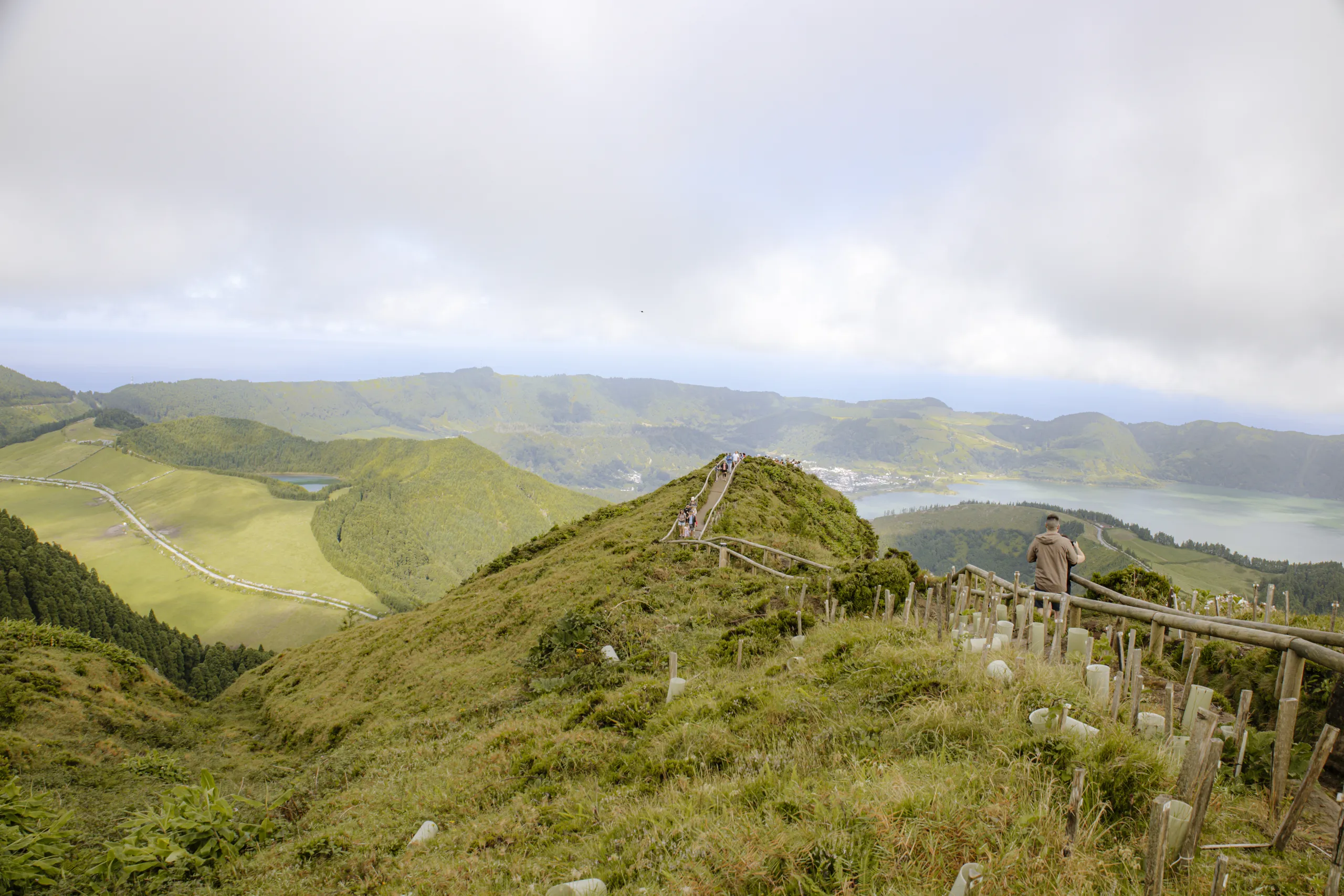
On day two we stood before one of the most iconic sights in the Azores: the Sete Cidades volcanic complex. We walked the Mata do Canário trail between walls of blooming hydrangeas, one of the great shows of an Azorean summer, and were left breathless at Grota do Inferno and Vista do Rei. In the afternoon we swam in the ocean warmed by the hot springs of Ponta da Ferraria, and a sunset over the sea stacks of Mosteiros closed a perfect day.
Day 3 – Furnas and Lagoa do Fogo
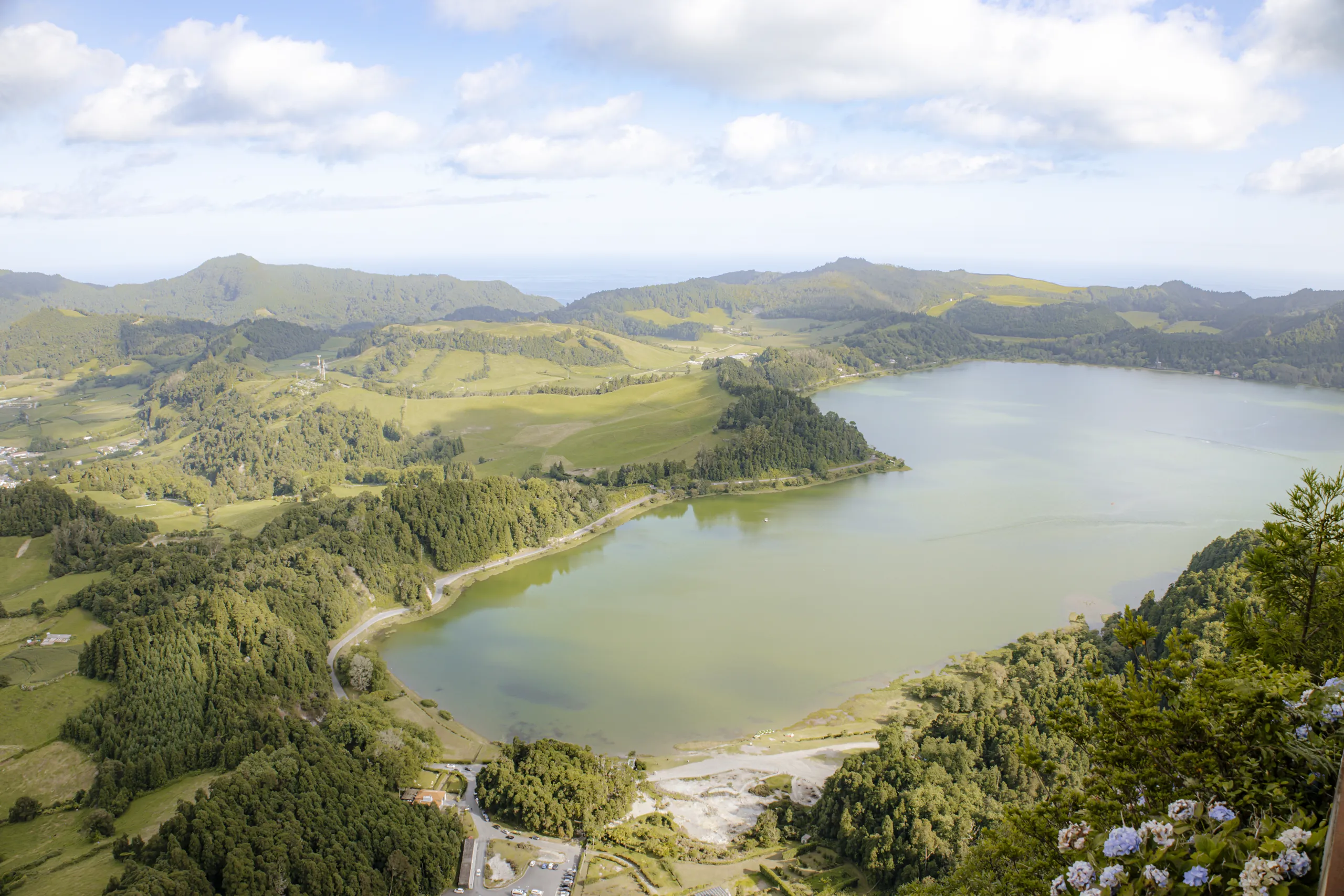
Day three took us into the geothermal heart of Furnas. Feeling the ground bubble beneath your feet among fumaroles and mineral springs is surreal. We watched the Cozido das Furnas, our lunch, being lifted out of the ground where the volcano had slow-cooked it, then relaxed in the warm, iron-rich waters of Terra Nostra Park and admired the wild beauty of Lagoa do Fogo.
Day 4 – Faial: the Caldeira and Capelinhos volcano
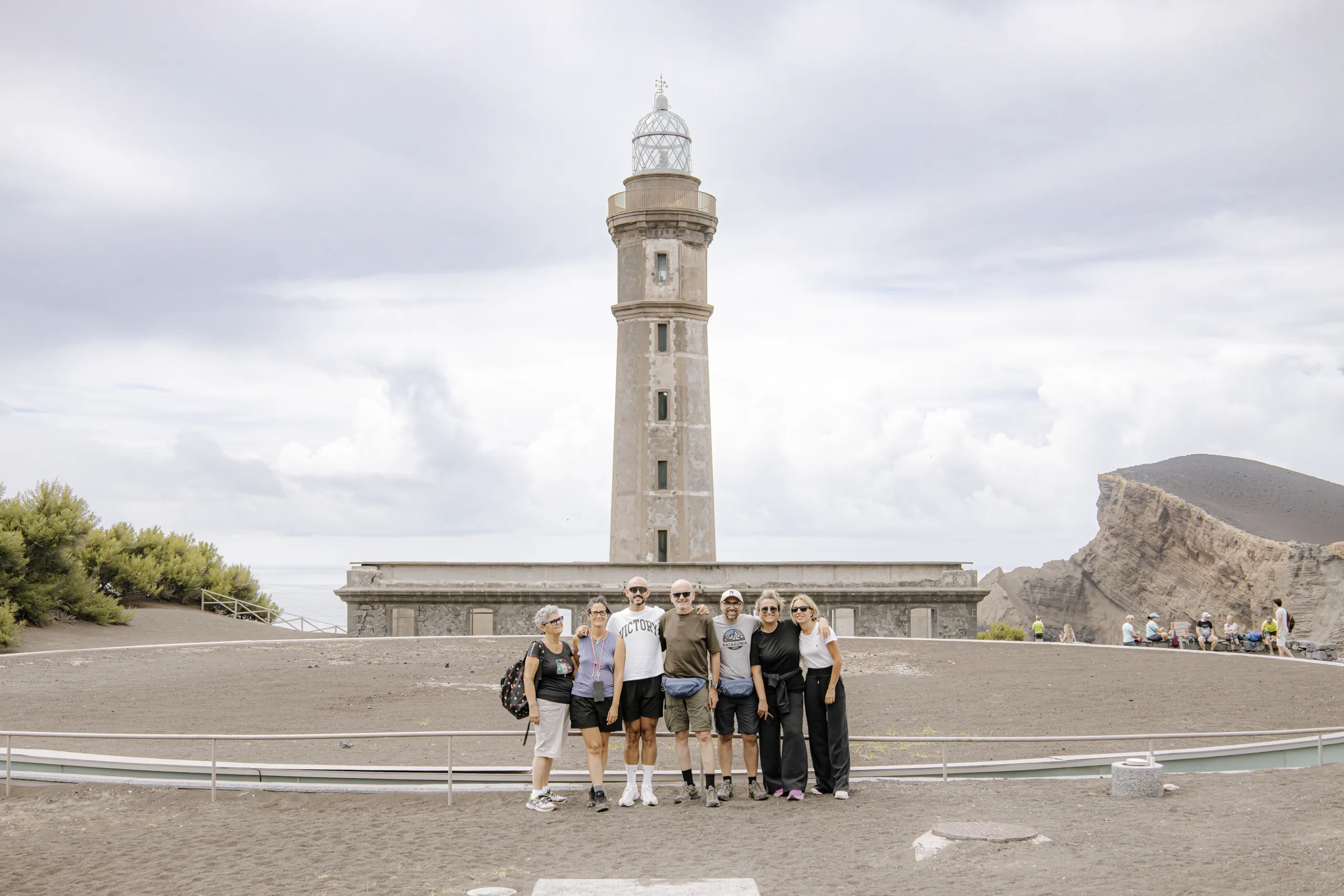
On day four we flew to Faial, the blue island. After the vast green Caldeira do Faial we were thrown onto another planet at the Capelinhos volcano: walking across that lunar landscape of ash, born from an undersea eruption in the 1950s, with the old lighthouse half buried, made us feel tiny. An evening on the colourful quays of Horta harbour, a crossroads for sailors from all over the world, was pure Atlantic spirit.
Day 5 – Pico: the Criação Velha vineyards
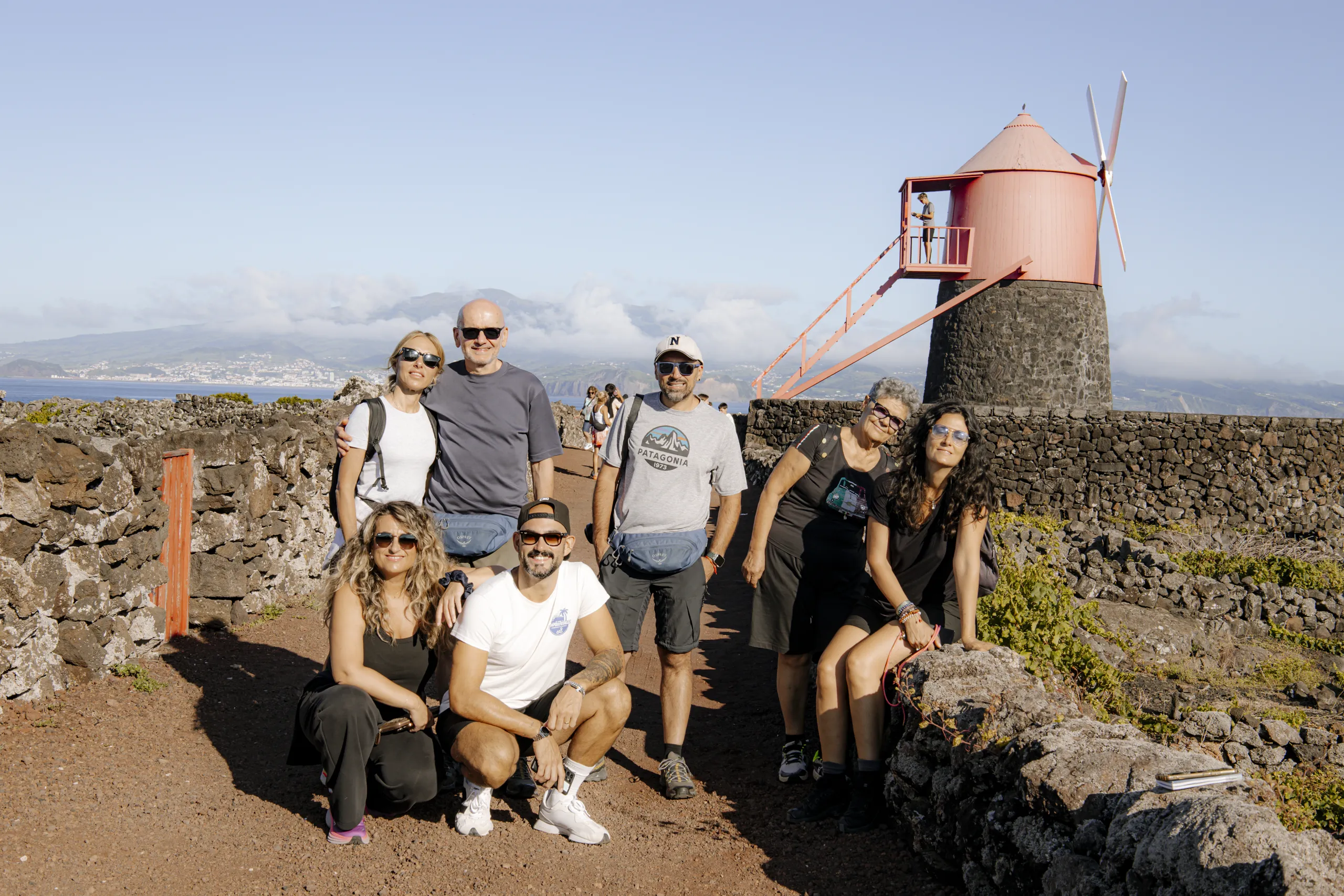
A short ferry ride took us to Pico, where we fell under the spell of the Criação Velha vineyards, a UNESCO World Heritage Site: a maze of black lava-stone walls built by hand to shelter the vines from the ocean wind, all the way to the little red windmill. A step back in time.
Day 6 – The plateau, Gruta das Torres and volcanic wines
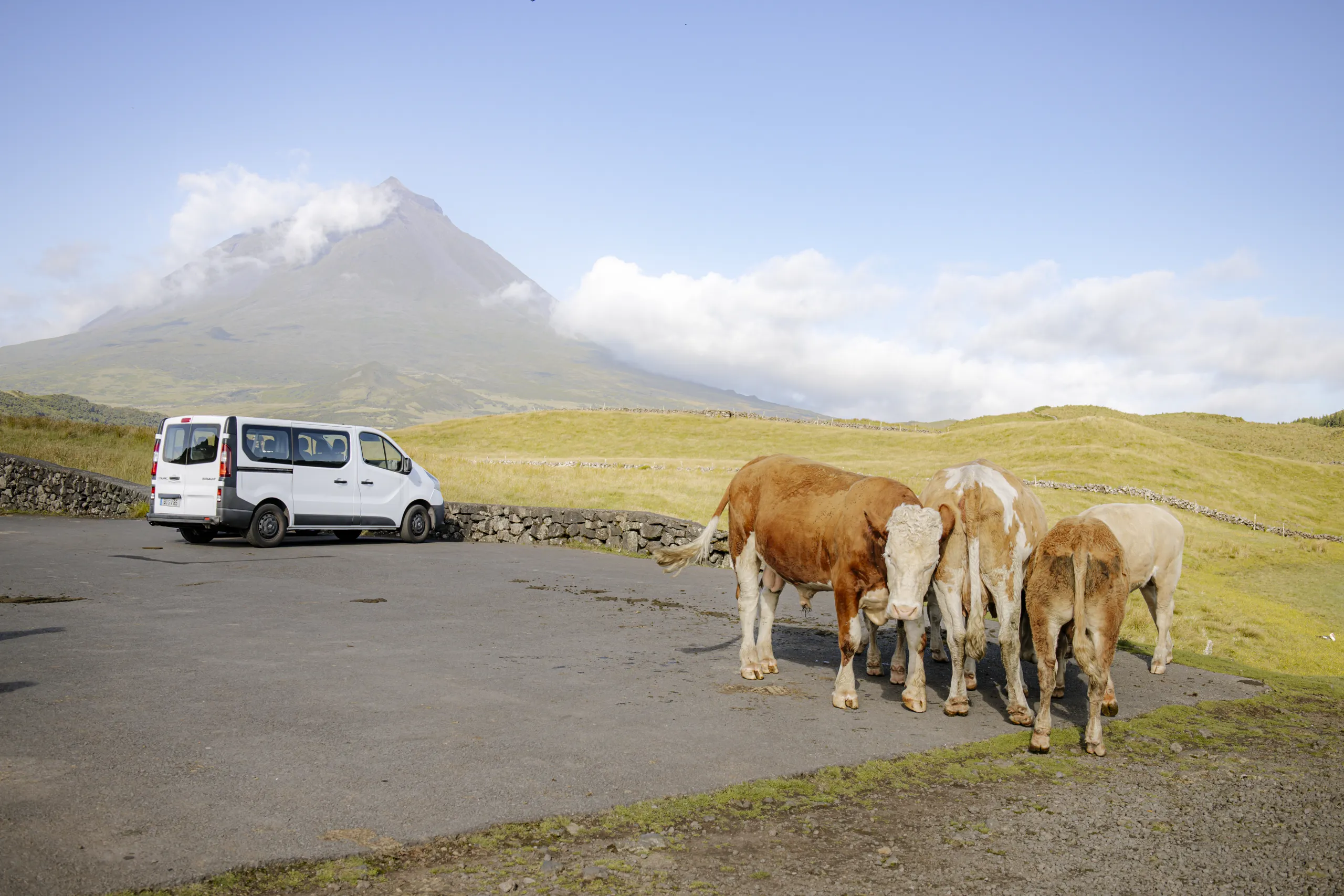
On day six we crossed the central plateau, with Mount Pico always watching over us, explored the high-altitude lakes and then went underground into Gruta das Torres, a long, dark lava tube. We ended the day with a tasting of volcanic wines at a local winery, toasting our trip.
Day 7 – Lajes do Pico, Manhenha and black sand
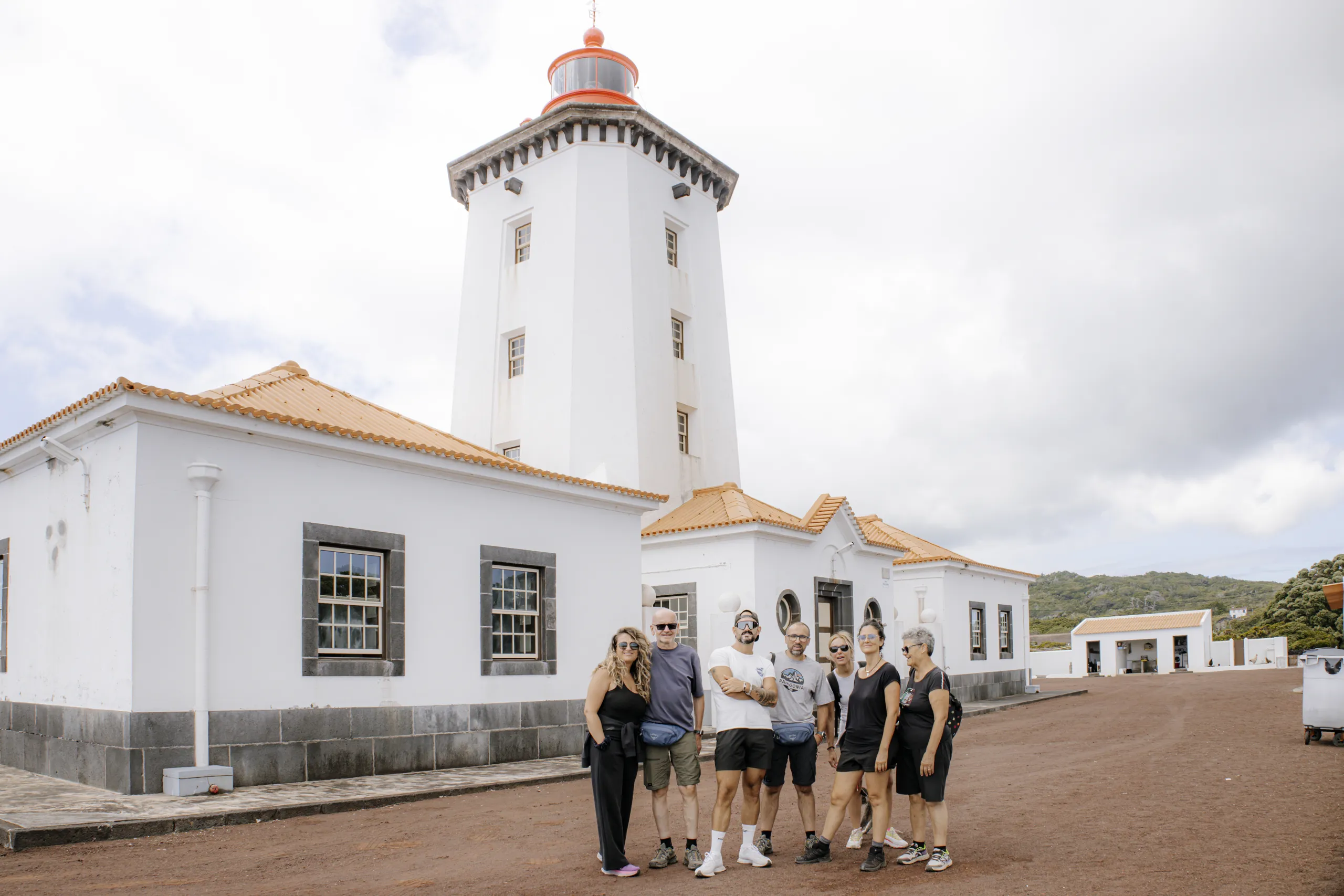
Day seven was for eastern Pico: rugged Lajes do Pico and its whalers' museum, the wind-swept cliffs by the Manhenha lighthouse and the black sand of Praia do Canto da Areia. Then an evening flight to Terceira.
Day 8 – Terceira: Serra do Cume and Angra do Heroísmo
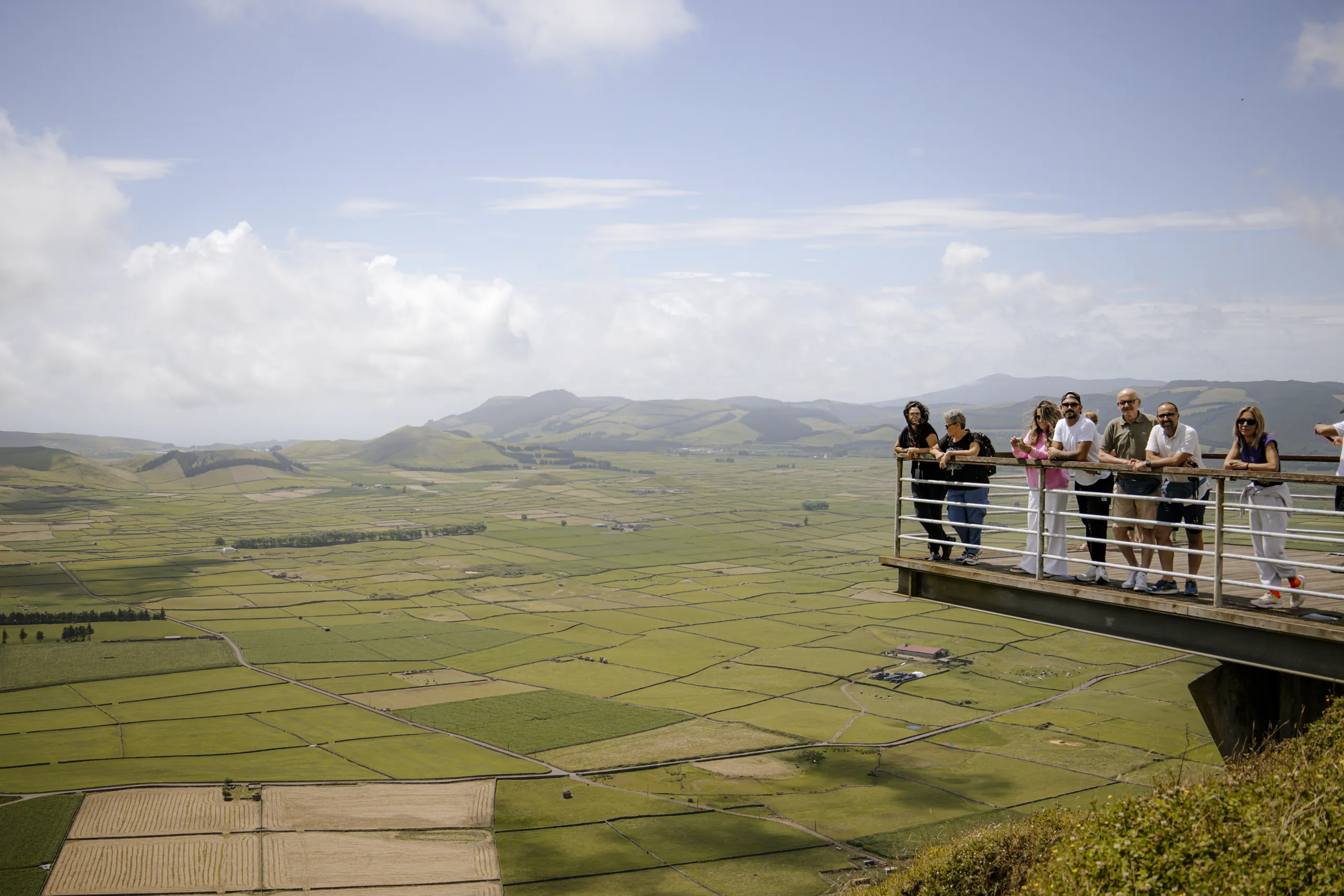
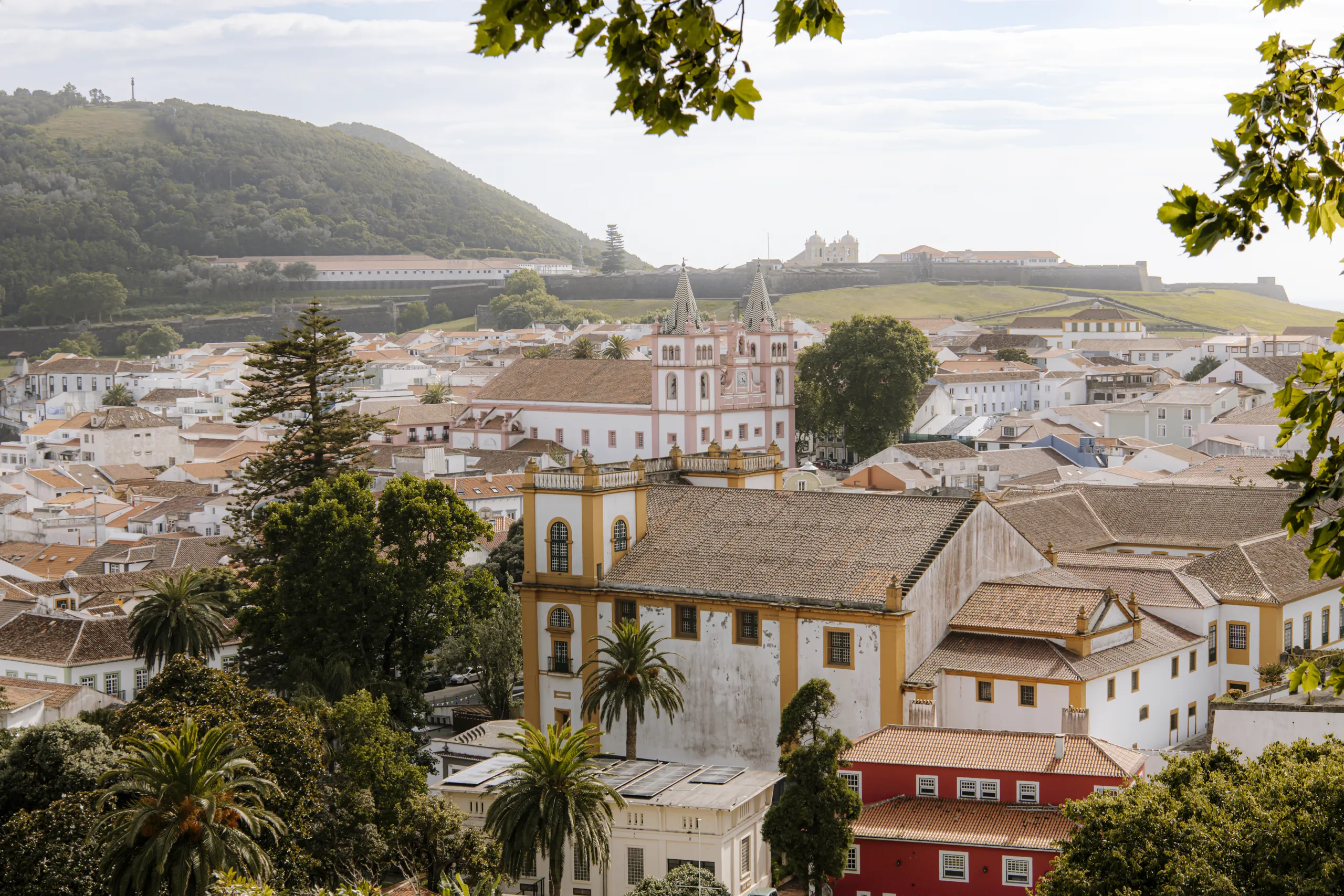
Terceira welcomed us with one of its most spectacular views, from Serra do Cume: a patchwork of green pastures divided by stone walls that looks painted. Then we wandered the elegant streets of Angra do Heroísmo, the first town in the archipelago to become a World Heritage Site, and climbed the volcanic peninsula of Monte Brasil for an incredible view.
Day 9 – Inside a volcano: Algar do Carvão
One of the strongest moments of the trip: going down into Algar do Carvão, a real volcanic chimney you can visit, with a crystal-clear underground lake lit by the light filtering from above. Gruta do Natal and the sulphur vapours of Furnas do Enxofre reminded us right after how alive this land is.
Day 10 – Biscoitos and a last dinner in Angra
We spent day ten on the north coast: swimming in the natural pools of Biscoitos, a maze of black lava washed by a refreshingly cool ocean, the views of Alagoa and the calm of Praia da Vitória. Our farewell dinner in Angra do Heroísmo was an intimate, happy moment to celebrate everything we had shared.
Day 11 – Heading home
One last breakfast together, a hunt for local products to pack, returning the cars at the airport, and the flight home with our eyes and hearts still full of the wild energy of these islands.
We got around every island by car, and we have gathered everything we learned in our tips for renting a car in the Azores.
See you in August 2027?
This trip brought our group together in a special way and convinced us to go back. If reading this has made you want to explore these islands next summer, get ready: our next Azores group trip is already in the works for August 2027. Come and discover this volcanic paradise with Alessio and me: it will be an unforgettable adventure.