Published on 30 September 2026
Renting a Car in the Azores: Our Tips for São Miguel, Faial, Pico and Terceira
This summer we drove across four Azorean islands with our group. Here is everything we learned about renting a car island by island, from booking to returning the keys.
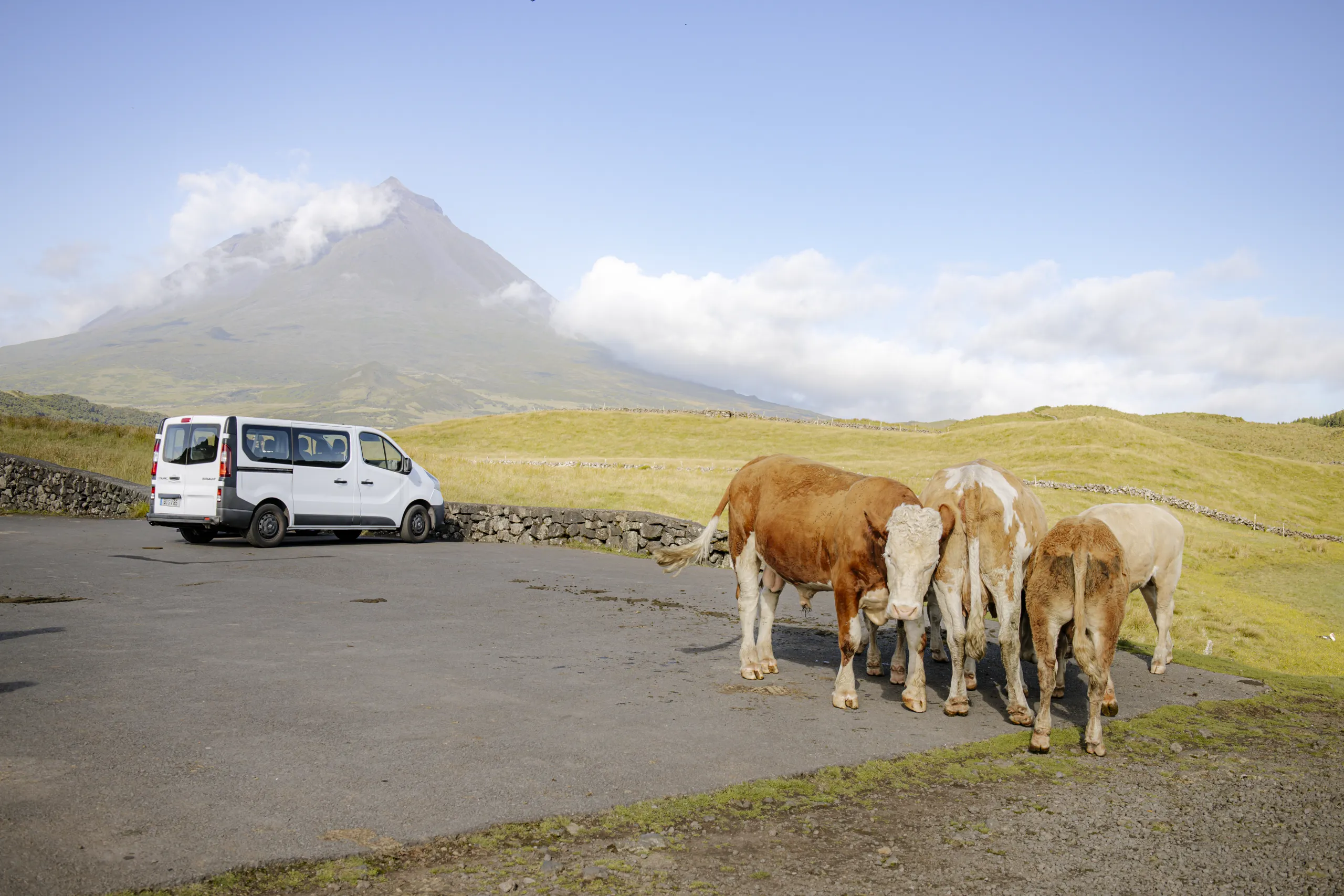
This August Alessio and I led our group on an eleven-day trip across the Azores: São Miguel, Faial, Pico and Terceira. We have written the full itinerary, day by day, but there is one thing that made the whole trip possible and deserves its own article: the car.
In the Azores a rental car is not a luxury, it is the key to the islands. Buses exist, but they are designed for locals, not for someone who wants to be at the Sete Cidades crater at sunrise and at the Mosteiros sea stacks at sunset. Every viewpoint, every trailhead, every natural pool we loved was at the end of a road that only a car could take us to. So here is what we learned, island by island, from picking up the keys in Ponta Delgada to dropping them off at the airport in Terceira.
1. One island, one rental
The first thing to understand is that you do not rent "a car for the Azores": you rent a car for each island. The islands are connected by short inter-island flights and, between Faial and Pico, by a ferry. We flew from São Miguel to Faial, crossed to Pico by ferry and flew on to Terceira, so we picked up and returned cars on every island.
Two practical consequences. First, plan your pick-ups and drop-offs around your flights: on the smaller islands rental desks are small and do not always stay open late, so an evening arrival needs to be agreed in advance. Second, if you are thinking of taking a car on the Faial–Pico ferry, read the rental conditions carefully: many companies do not allow it or do not cover the car on board. It is usually simpler, and often cheaper, to return the car in Horta and pick up a new one in Madalena.
2. Book early, especially in August
The Azores are not a mass-tourism destination, and that is exactly why we love them. But it also means rental fleets are small, especially on Faial, Pico and Terceira. In August, the best cars at reasonable prices disappear months in advance, and last-minute prices can be surprising.
For our 2027 group trip we are going to book as soon as the flights are confirmed, and we will compare prices across companies with DiscoverCars: when you need four separate rentals on four islands, being able to see all the local and international companies side by side, with the insurance and deposit conditions spelled out, saves a lot of time and a lot of tabs.
3. Manual or automatic? Small is beautiful
Most cars in the Azores have a manual gearbox. Automatics exist but there are fewer of them and they cost more, so if you cannot drive a manual, book even earlier.
As for size, think small. Village streets are narrow, parking spots near the viewpoints are tight, and in historic towns like Angra do Heroísmo and Horta you will be grateful for every centimetre. At the same time, do not go for the weakest engine available: roads climb steeply from sea level to the crater rims in just a few kilometres. On São Miguel the drive up to Sete Cidades and Lagoa do Fogo, and on Pico the road across the central plateau at the foot of the mountain, are long climbs where a little extra power makes the drive far more relaxed.
4. Insurance and deposit: read before you click
This is where rental prices that look cheap can become expensive. Before booking, check three things:
- The excess: how much you would pay in case of damage. Narrow roads lined with lava-stone walls and hydrangea hedges make scratches on the sides and mirrors more likely than you would think.
- The deposit: most companies block an amount on a credit card (not a debit card) in the driver's name. Make sure your card limit covers it, especially if you are renting on several islands within a few days.
- What is excluded: tyres, glass, underbody and ferry crossings are often left out of the basic cover.
Our advice is to choose full coverage with a low or zero excess. With so many short rentals in a row, you want to hand back the keys without anxiety and head to the next plane.
5. At pick-up: photos, fuel, and a look at the tyres
At every pick-up, walk around the car and photograph or film every side, the wheels and the windscreen before you leave, and do the same when you return it. Check the fuel policy (full-to-full is the fairest) and have a look at the tyres: the roads are often wet and slippery with moss in the shade, so decent tread matters.
6. What driving is really like on each island
São Miguel is the busiest island and the one with the best roads, including fast roads along the coasts. The tricky part is the popular spots: Sete Cidades, Lagoa do Fogo and Furnas get crowded in August, and parking at the viewpoints fills up quickly. Go early in the morning: you get the light, the silence and a parking spot. Also check before leaving, because in high season access by car to some viewpoints can be restricted or managed with shuttles.
Faial is small and easy to drive. The road up to the Caldeira climbs into the clouds, and the drive west to Capelinhos crosses peaceful, open countryside. Horta has a lively harbour and limited parking in the centre, so leave the car a little further out and walk along the seafront.
Pico is where the car becomes part of the adventure. The coastal road links the villages, from Madalena and the Criação Velha vineyards to Lajes do Pico and the Manhenha lighthouse, while the roads across the central plateau take you through pastures, lakes and fog, with the volcano always there. Petrol stations are few once you leave the towns: fill up before heading inland or to the east of the island.
Terceira has a dense network of roads, many of them lined with stone walls and pastures. The climb to Serra do Cume is short and rewards you with one of the most beautiful views of the trip, and a car is the only practical way to reach Algar do Carvão, Gruta do Natal, Furnas do Enxofre and the natural pools of Biscoitos in a single day.
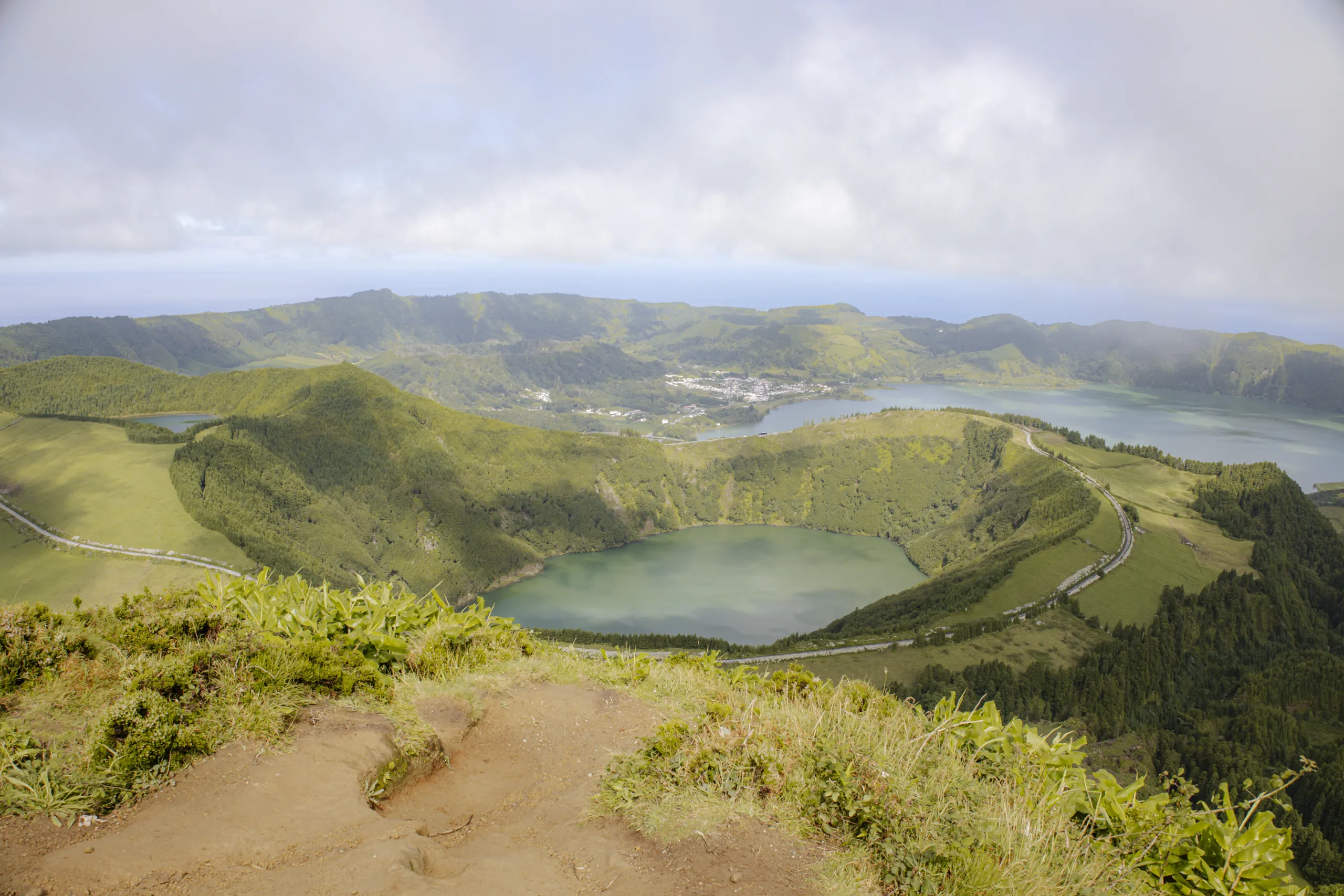
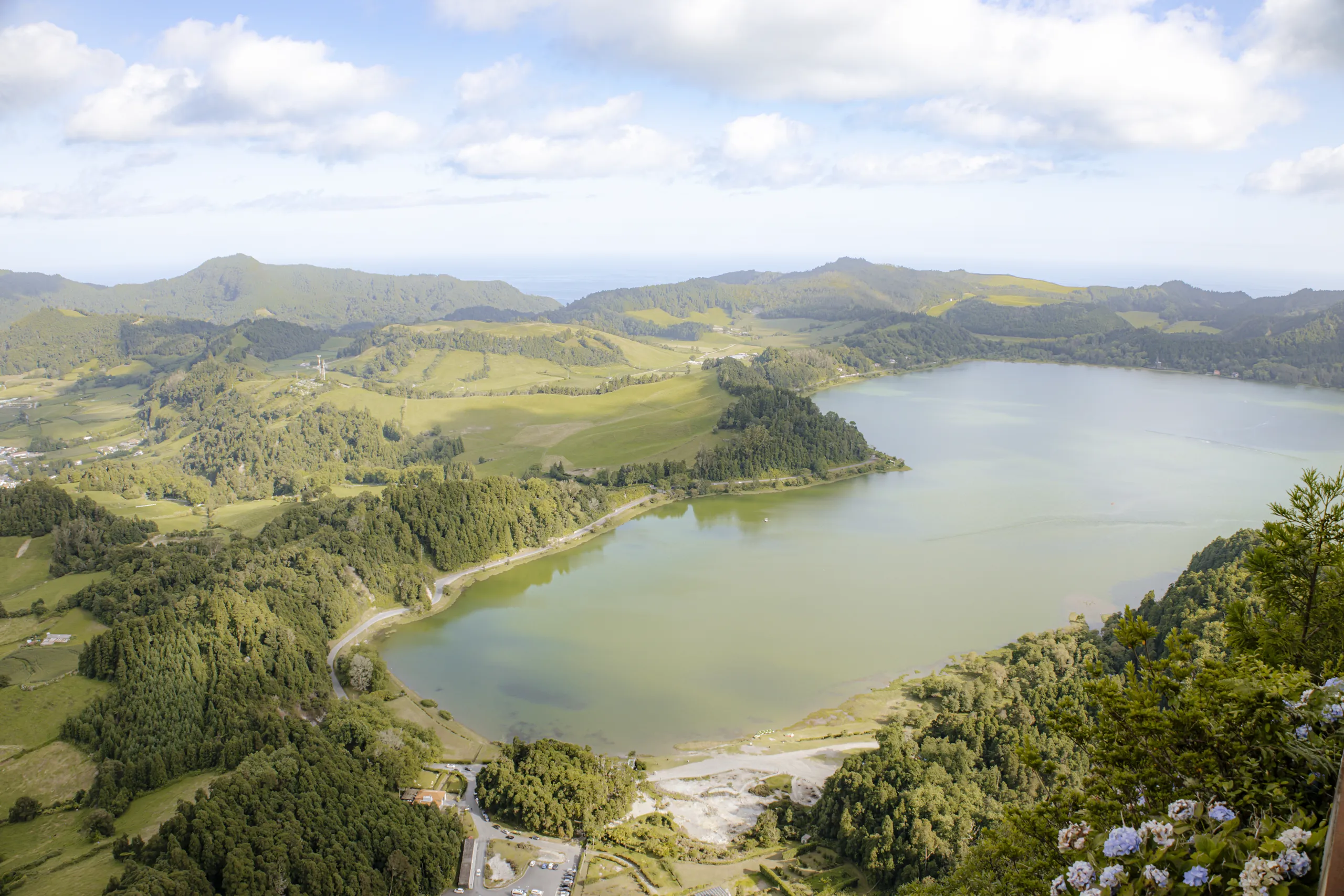
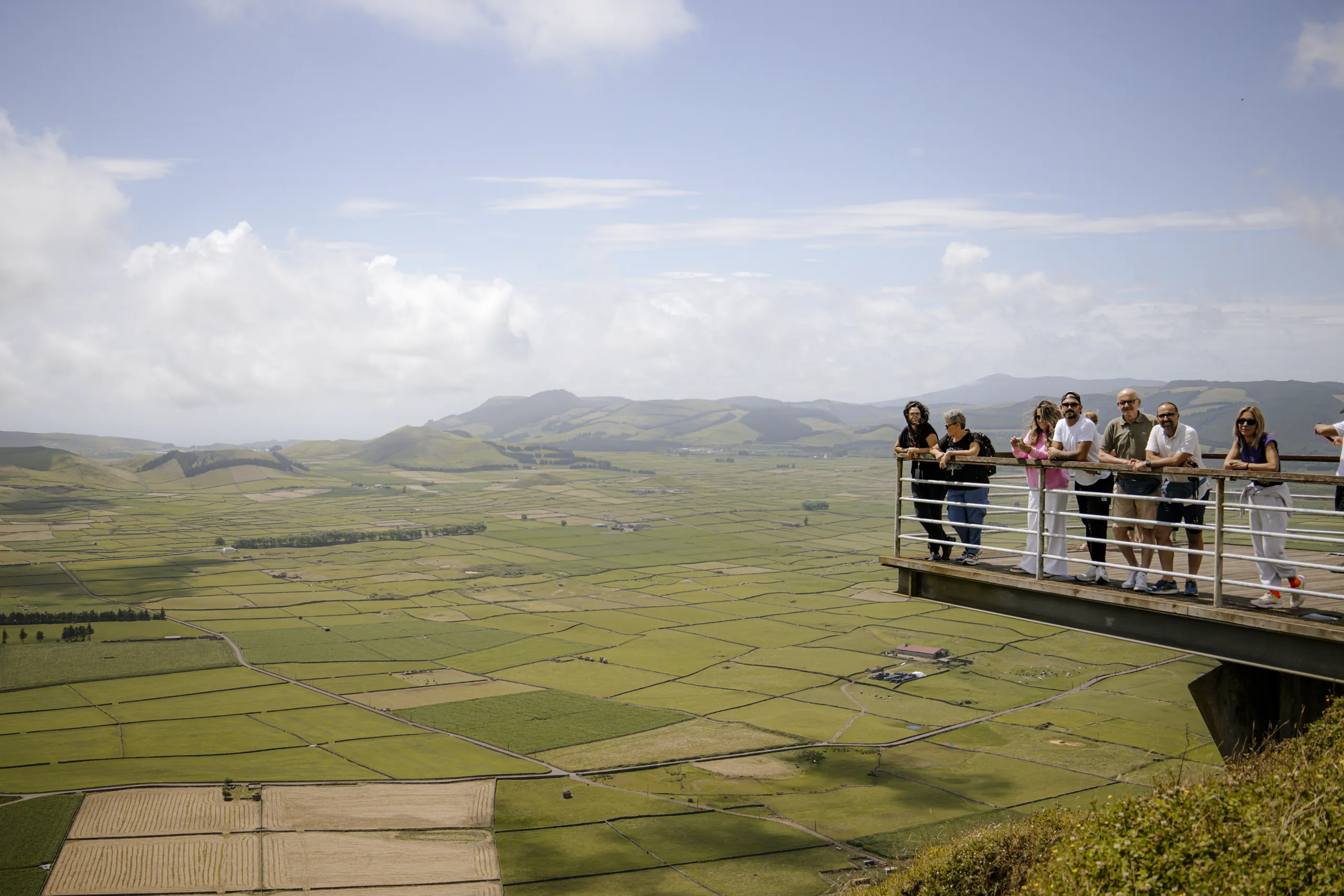
7. Fog, cows and the Azorean pace
Three things every driver in the Azores should know:
- The weather changes in minutes. You can leave a sunny coast and find thick fog at the crater rim. Drive slowly with dipped headlights, and before driving up to a viewpoint check the live webcams online: there is no point in climbing into a cloud.
- Cows have right of way. On the upland roads it is normal to meet a herd being moved from one pasture to another. Stop, turn off the engine, enjoy the moment.
- Everything is closer than it looks, and further than it feels. Distances are short, but winding roads and constant photo stops make every journey longer. Plan fewer stops a day and enjoy each one.
8. Good news: no tolls, and parking is (mostly) easy
There are no motorway tolls in the Azores, which keeps things simple. Outside the main towns parking is free and easy to find; in Ponta Delgada, Angra do Heroísmo and Horta look for public car parks rather than circling narrow one-way streets.
Our quick checklist
- Book early, one rental per island, and match pick-up times to your flights.
- Choose a small car with enough power for the climbs; book automatics well in advance.
- Take full coverage and bring a credit card with a high enough limit for the deposit.
- Photograph the car at pick-up and drop-off.
- Do not take the rental on the ferry unless the contract explicitly allows it.
- Check the webcams before climbing to the craters, and fill up before heading inland.
- Start early to beat the crowds at the most famous viewpoints.
See you on the road in 2027
Driving from crater to crater, with the ocean always on the horizon, was one of the best parts of our trip. We are taking our group back to the Azores in August 2027 along the same route, and this time the cars will be booked the day after the flights. If you want to join us, have a look at the itinerary and write to us.
This article contains affiliate links: if you book through them we may earn a small commission, at no extra cost to you.